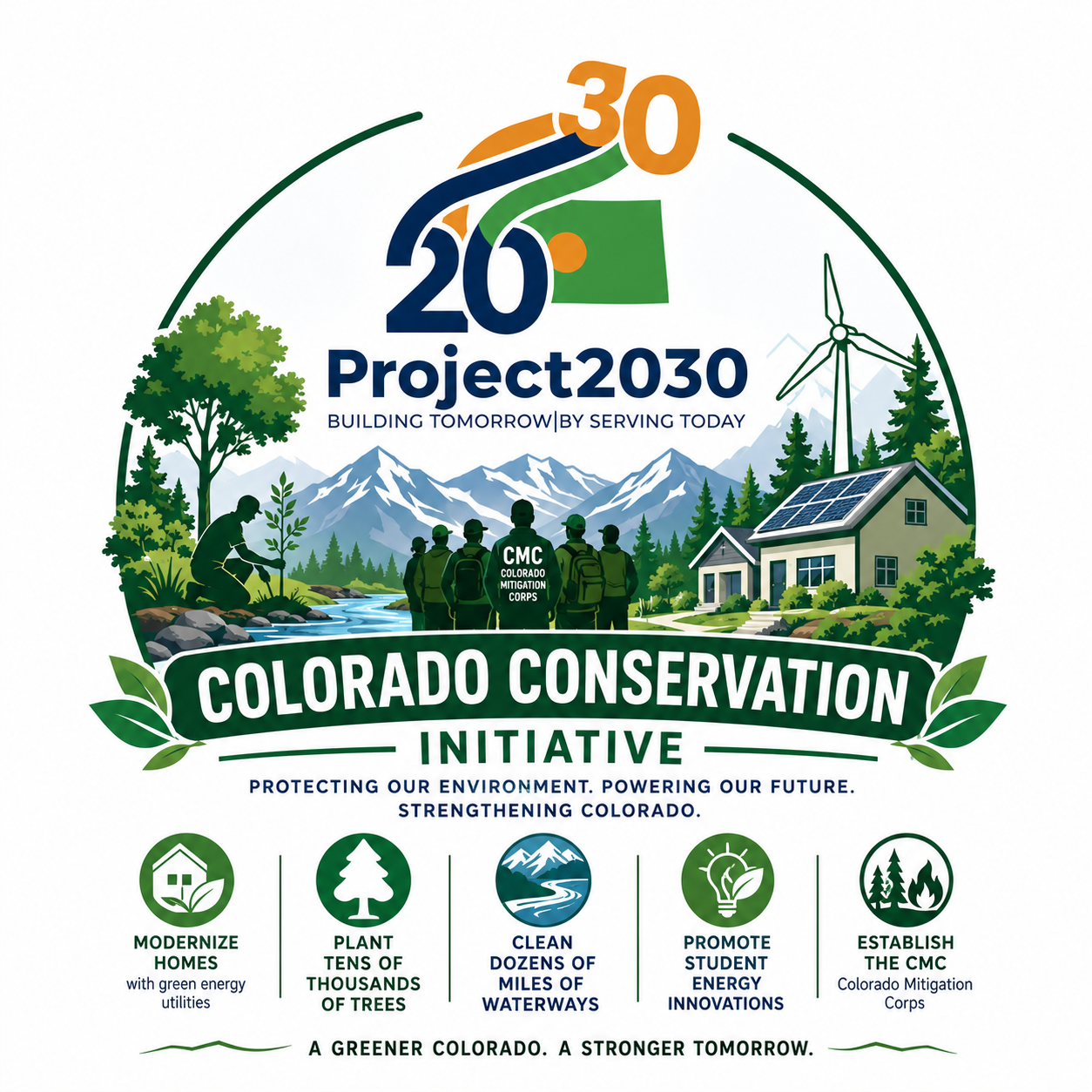
Colorado Conservation Program
What does the project entail?-Clean 30 miles of Colorado’s waterways.
-Promote 80 student energy innovation projects.
-Plant 60,000 trees throughout heavily harvested areas.
-Modernize 100 homes with affordable green energy utilities.
-Mitigate over 3,000 acres of Colorado wilderness to mitigate wildfires.
Colorado’s greatest quality besides its people is its incredible wilderness and natural resources. Home to 58 mountains above 14,000 ft, blessed with 3.5 million acres of wilderness, and containing nearly every natural resource known from gold to timber, Colorado is a truly unique State, and the preservation of its environmental well-being is essential not just to the state but the western United States. As the wildfires ravage the state, and climate change ravages the nation and the world, Colorado has the opportunity to be a leader in energy and environmental responsibility.
Updates on the project!
Project Phases
-
Recruit and train conservation volunteers across Colorado.
Establish partnerships with local governments, conservation districts, nonprofits, and private landowners.
Conduct statewide assessments identifying:
High wildfire-risk areas.
Forests requiring fuel reduction.
Watersheds needing restoration.
Public lands in need of cleanup.
Create a statewide GIS conservation priority map.
Secure initial grants, donations, and equipment.
-
Coordinate volunteer forest thinning and fuel reduction projects.
Support prescribed burn initiatives with local and state partners where appropriate.
Remove dead timber and invasive vegetation in priority areas.
Assist communities in creating defensible space around homes and critical infrastructure.
Promote reforestation with native tree species after wildfire events.
-
Restore degraded streams and wetlands.
Organize river, reservoir, and public land cleanup projects.
Remove invasive plant species.
Support native wildlife habitat restoration.
Expand pollinator-friendly landscapes in partnership with local communities.
Promote soil stabilization and erosion control in vulnerable areas.
-
Develop conservation education programs for schools and communities.
Encourage responsible outdoor recreation and stewardship.
Support research into innovative conservation technologies and sustainable land management.
Publish annual Colorado Conservation Reports measuring environmental outcomes.
Establish a permanent volunteer conservation network capable of responding to future environmental challenges.